
Customer case
A look inside the HappyFarmer warehouse in Oirschot
We drive past fields and farmyards on our way to HappyFarmer in Oirschot. A fitting route for a visit to a company that serves the agricultural sector. Their warehouse and office are housed in a former pig barn, converted into a pleasant place to work.
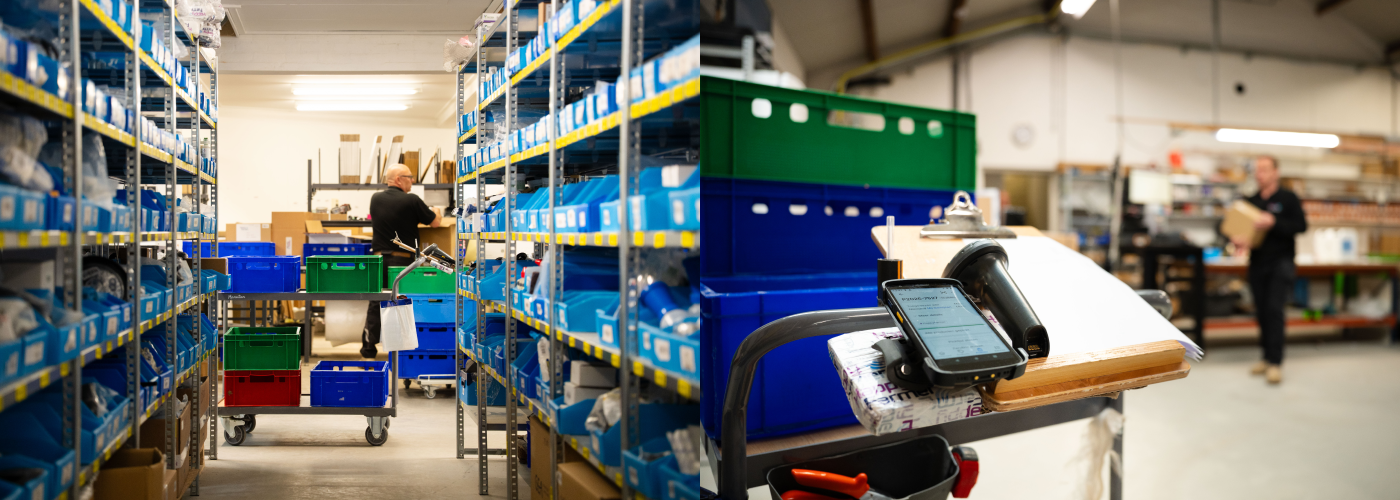
Thomas meets us in the warehouse. It's packed with parts for milking parlours and milking robots — from small clips to large machine components. Around 2,000 products are in stock across the 500m² space, out of 5,000 listed in the webshop. Together, they help farmers around the world keep their operations running.
Strong growth, with barely any extra staff
HappyFarmer grew by 40% last year. With just two new colleagues. Thomas explains: "Our growth is mostly driven by marketing, and that's something we can control. We can expand into new markets when we're ready. But as soon as we feel things starting to slow down, we know we need to optimize before we scale again."
From chaos to calm
It wasn't always this smooth. Orders came in through Shopify, got pushed to the ERP system, manually checked, printed as a picklist, and taken to the warehouse. Products had no fixed location — they were arranged by SKU order, and if you didn't know the warehouse, you were in for a lot of searching.
"You really had to know what the product looked like. You couldn't just put someone on the floor and say: go pick orders. It would turn into chaos immediately."
And it did. One day there were 50 picklists and everyone was getting in each other's way. Thomas had barely started and could already see this wasn't going to work. He got the team together and they decided to find a WMS. That same afternoon, Thomas called Picqer. A few days later, the onboarding was done.
Over the next two months, they built a solid foundation: setting up locations, counting all stock, and booking everything into the right spot. Once that was done, they started fresh on a Monday morning with Picqer as their new warehouse system.
How things run now
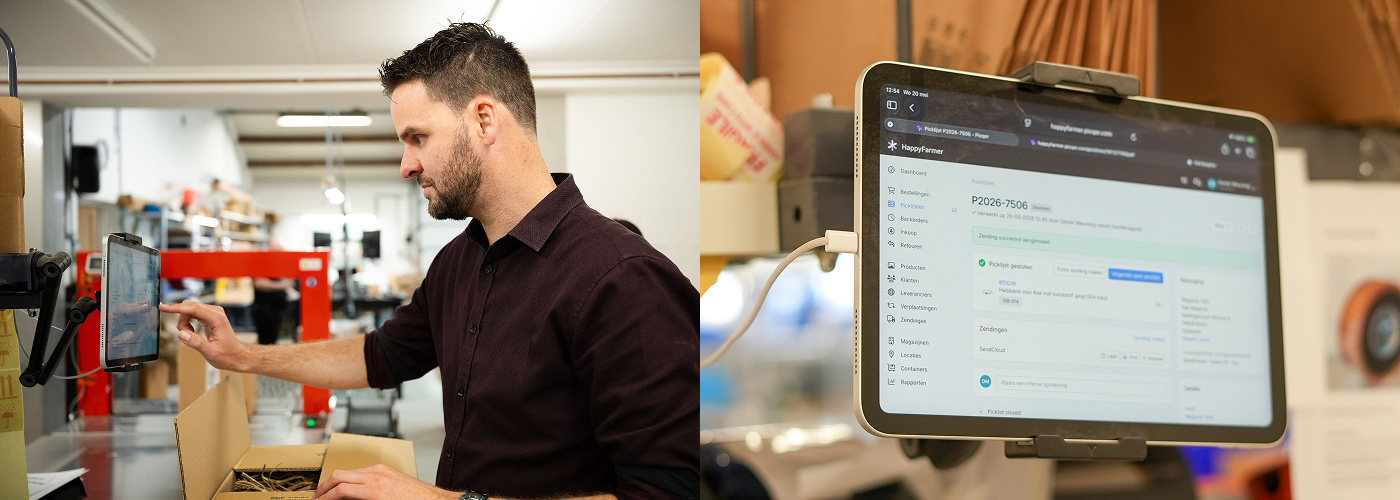
Orders are automatically pushed from Shopify to Picqer. The picklist is printed and products are picked by location number. Everything gets scanned as it's picked to prevent mistakes. After packing, the shipping label rolls out of the printer automatically and the shipment is registered through Sendcloud. Invoices are handled via Moneybird. Everyone in the warehouse knows exactly what needs to happen.
"There's a completely different feeling in the warehouse now. Everyone knows where to go and what to do. It's calm."
The difference is clear. Where 50 pick lists in a day used to mean chaos, the team recently worked through 60 pick lists in a single morning — without breaking a sweat.
What Thomas builds on the Picqer API
Picqer is a solid foundation for HappyFarmer's operations — and Thomas builds on top of it himself using the Picqer API. The first step was warehouse dashboards: how many orders need to be picked, how many are done, how many need to be checked, how many are on the pallet ready to ship, whether there are backorders, and whether any items need to be assembled first.
Next came a custom purchasing system. After a few unsuccessful attempts with third-party tools, Thomas decided to build it himself.
"When something goes wrong with someone else's tool, you can complain. When something goes wrong with your own, you have to fix it. That was the biggest hurdle. But it worked out so well that we decided: let's automate everything we can. With the Picqer API, we have more insight than we ever had before."
Advice for other webshops
We close with the question we ask every business owner in this series: what would you tell a webshop that wants to improve its day-to-day warehouse operations?
Thomas doesn't hesitate: "Start with Picqer. You need a WMS to get visibility, and visibility brings calm. Once you're up and running, you can always layer things on top — adjust, optimize, automate. But just start. Everything you can do today is one less thing to do tomorrow."