Customer case ZO
"Picqer thinks ahead for you. That means you can spend your time as an entrepreneur more wisely."
How Bert and Arjen from ZO automated their logistics operation with Picqer — and why the payoff went far beyond saving time.
A visit to the warehouse in Lekkerkerk
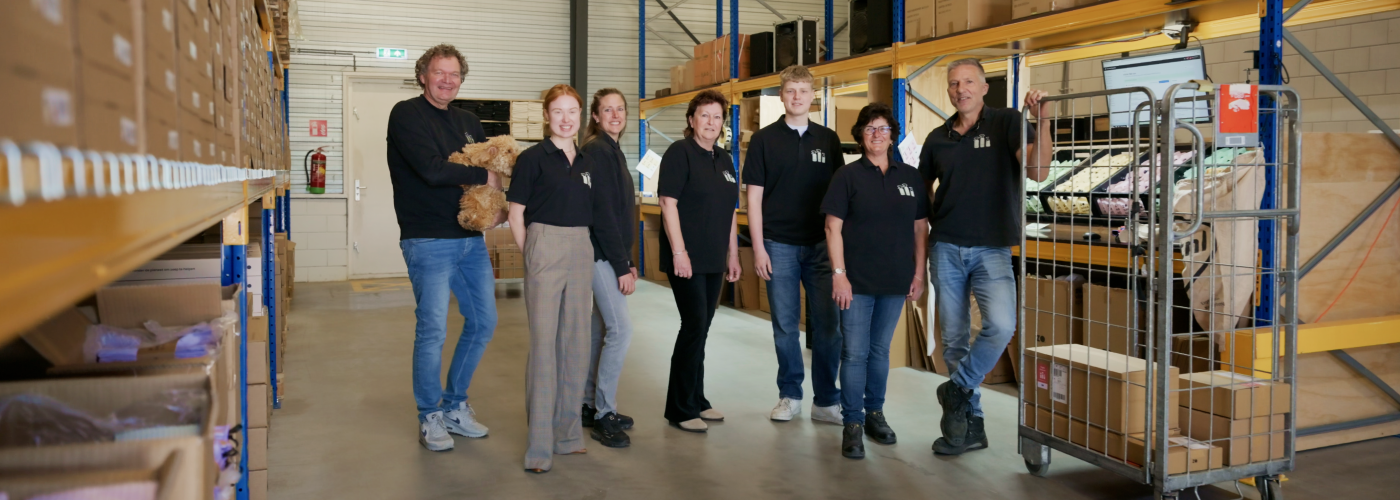
April 2026 – We visited Bert Groen and Arjen de Ruiter, co-founders of ZO, a month after moving their warehouse. Operations are running smoothly: staff move between the shelving units while concentrate is being filled into packaging from 1,000-litre IBCs at the back. Orders that come in go out the same day, and not unimportantly: the warehouse is spotlessly clean.
About ZO
Bert and Arjen both came from the B2B world — Bert from healthcare, Arjen from the food industry. There they noticed that people were spending less and less time cleaning, even as the need for it grew. And increasingly, the work was falling to the users themselves rather than a professional cleaner.
That insight became the foundation of ZO: maintaining your own space as a routine, not a chore. To make that possible, the cleaning product itself had to be different: easier to use, but also sustainable and affordable.
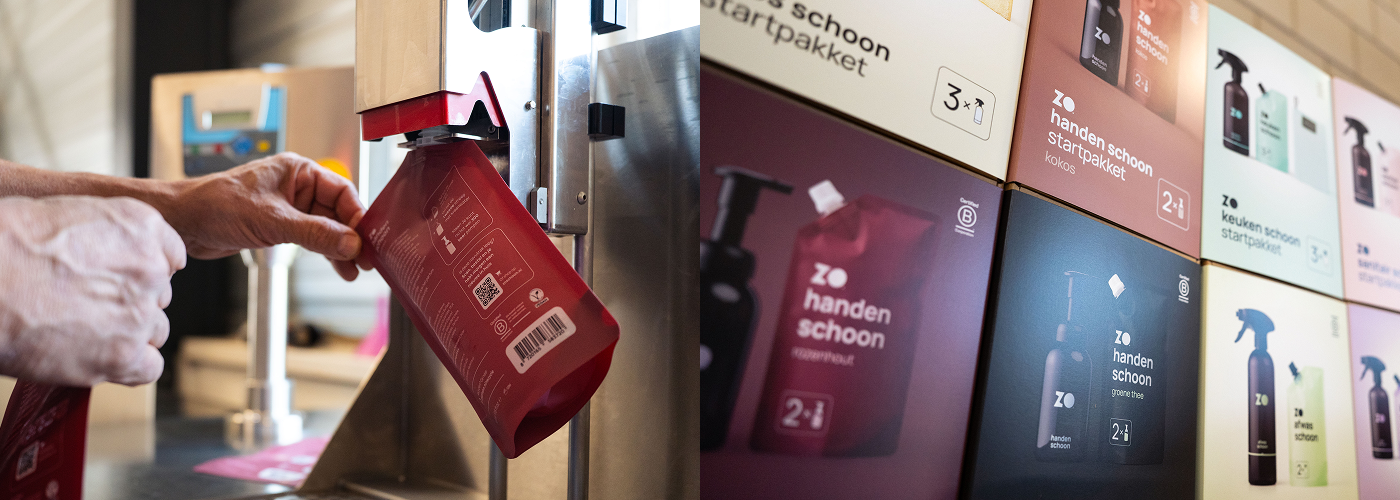
The conclusion they reached: sell only concentrates. In Bert's view, anything that isn't a concentrate can't truly be sustainable. Most cleaning products on shelves today are around 98% water. ZO supplies only the active ingredient — you add the water at home. It's a logical business decision, but the hardest one to market.
"When people see a €3 bottle of soap on the shelf next to our €15 bag of concentrate — which lasts ten times as long — they still reach for the €3 one. Because it looks cheaper."
What triggered the move
ZO had grown quickly, and the old warehouse wasn't keeping up. Staff were spending a lot of time walking and searching because tasks were spread all over the floor. Products were stored wherever they fit, not where it made most sense.
When a unit of around 1,000 m² became available in Lekkerkerk, the timing was right. The space was there, the old warehouse no longer matched where ZO was heading, and Lekkerkerk offered the chance to bring everything under one roof. "We were ready for it, and it sets us up for the future too," says Bert. Storage, assembly, filling, packing starter kits and preparing shipments — all in the same building.
Step by step until the moment came
Moving with a live operation means you can't stop. Orders keep coming in, customers expect their parcel within 24 hours. Standing still isn't an option.
So Bert, Arjen, and team members Samantha and Anja took it one step at a time. First, the new unit was cleaned from top to bottom. According to Bert, things only work well in a clean space — especially when your product is cleaning supplies. Then they moved everything across gradually. And one day, it was time: from that point on, all picking happened from the new warehouse.
What ZO deliberately does differently now
Moving might solve a space problem, but if you bring the same mistakes with you, you haven't gained much. ZO made two improvements that have made a real difference.
One: structure everything. In the old warehouse, as Bert puts it, things were often picked haphazardly. Products sat wherever there was room, and shipping boxes were chosen by gut feel. In the new location, the fast movers are right next to the packing tables — saving a lot of steps over the course of a day. All three packing stations are set up identically so anyone can work at any of them. And for each order, the best packaging is automatically suggested.
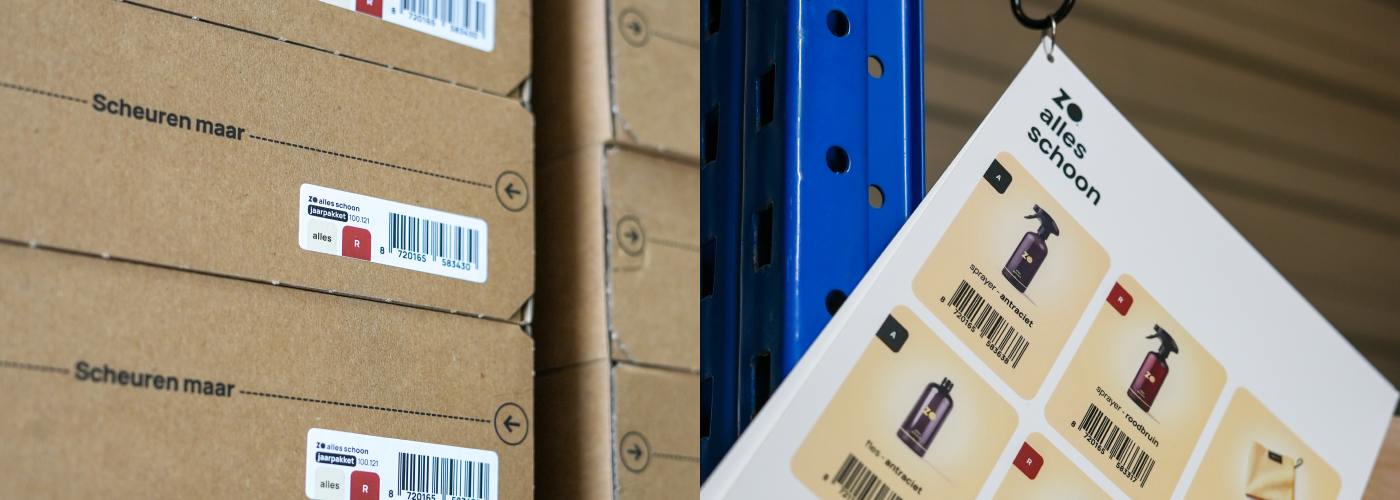
Two: make everything scannable. It sounds like a small thing, but it's what makes the operation nearly error-free. In the first days at the new location, labels were printed and attached to every product. From that point on, every order is scanned.
"When you're processing a few hundred orders a day, picking errors creep in quickly without you even noticing — if you're not scanning. Scanning doesn't just make the work faster; it makes it genuinely difficult to make a mistake."
A workday at ZO follows a clear rhythm
Orders come in throughout the day — from their own WooCommerce webshop and via business orders. Everything flows into Picqer. Anything ordered before 2 PM goes out with the carrier the same day at 5 PM.
Alongside picking and packing, other work is always in progress. Concentrate arrives in 1,000-litre IBCs and is filled into packaging on-site. Starter kits are packed into boxes and staged for shipping. What gets done first depends on what's most urgent. But the priority is always clear: get the orders out on time, then handle the rest.
New people get up to speed quickly
A well-run warehouse needs to keep running well when someone new steps in. Alongside three permanent staff, ZO works with a number of zero-hours contract workers. For them, it's important to be able to contribute quickly.
The way of working is therefore documented: how to process an order, how to prepare a shipment, which box goes where. New people shadow an experienced colleague, see how it works, and are soon able to work independently.
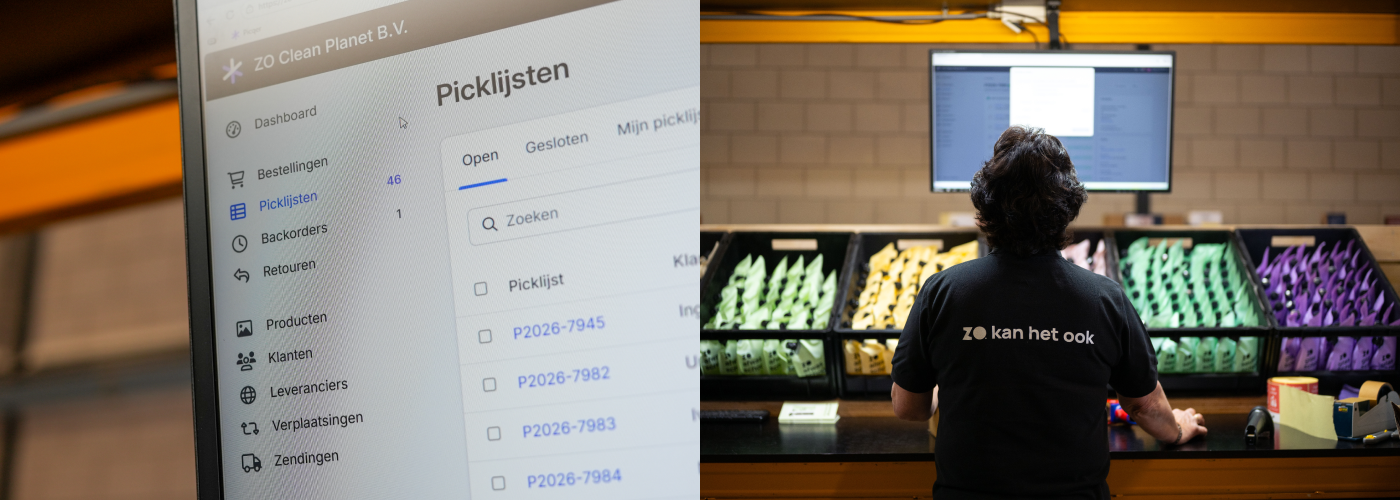
Picqer makes that straightforward: a new order automatically generates a pick list showing which products to pick, where they're located in the warehouse, and which shipping packaging to use. Once the products are picked, they're scanned and packed. Meanwhile, the shipping label prints automatically. The parcel is ready for the carrier in no time.
"Picqer is self-explanatory. The pick list for each customer appears automatically, you scan the products, and then a shipping label rolls out automatically. It works really smoothly, and the chance of errors is virtually zero."
What's still on the to-do list
Arjen still has one important item on his list: adding location numbers for all warehouse spots in Picqer. Once that's done, Picqer will show exactly where each product is stored and what the stock level is per location. Pick lists will also be automatically sorted in the most efficient route through the warehouse, so you only need to walk the aisles once.
It says a lot about ZO. Not trying to improve everything at once — just doing one thing at a time, and doing it well.
Advice for other webshops
We wrap up with the question we ask every entrepreneur: what would you advise a webshop that wants to improve its day-to-day warehouse operation?
Bert answers without hesitation: "Speed is everything. Not just the speed at which you get an order out the door, but the speed of the systems you work with. Picqer is incredibly fast and integrates easily with other systems. That just makes everything work so much better."
Arjen adds: "The best thing you can do is switch to a system like Picqer — one that thinks ahead for you and keeps the chance of errors as small as possible. That frees you up, as an entrepreneur, to spend your time on better things than sorting out order mistakes."
ZO at a glance
- Founded: in 2020 by Bert Groen, Arjen de Ruiter, Joey Verseput
- Locations: warehouse in Lekkerkerk, shop and office in Driebergen
- Warehouse team: 3 permanent staff + flexible workforce
- Software and tools: WooCommerce + PostNL + Picqer (since 2023)