

Installing Zebra printer
These steps walk you through installing a Zebra label printer on your Windows or Mac computer and setting it up for shipping labels. Popular models include the GK420d, ZD420d, and ZD421d.
On this page
Installing on Windows
Don't connect the printer to your computer yet.
First, download Zebra Setup Utilities. Install the application by clicking through all the steps with the default settings.
Installing the Zebra printer
Now use Zebra Setup Utilities to install and configure the Zebra printer.
Open Zebra Setup Utilities. Choose 'USB' and click 'Next'.
When you see this screen, connect the Zebra printer to your computer and turn it on.
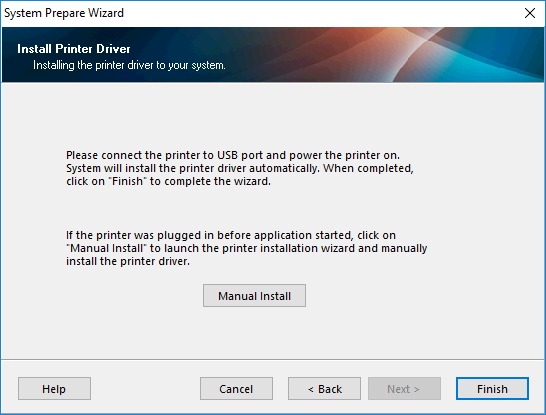
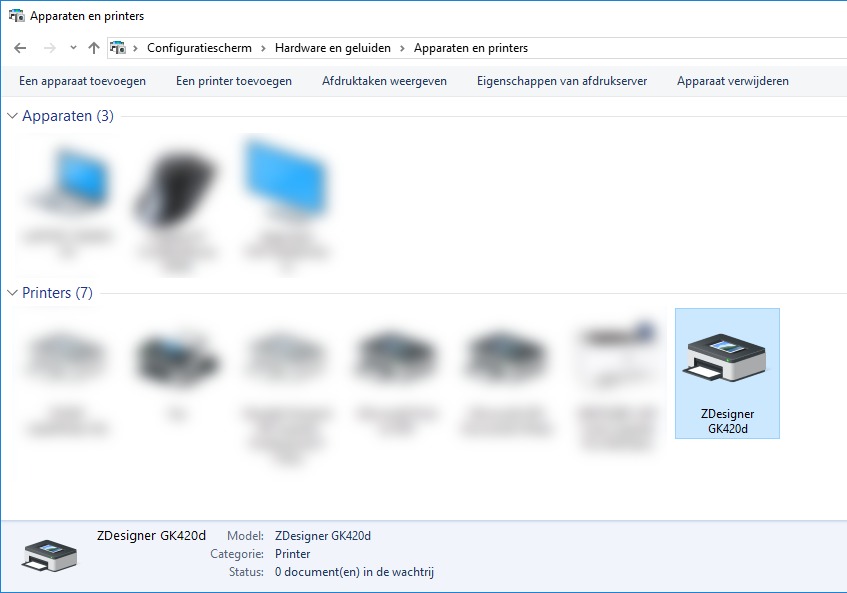
Wait for Windows to recognize and install the printer. This happens on its own. Want to check that it worked? Type 'Printers' in the Windows search bar. Your printer now shows up in the list.
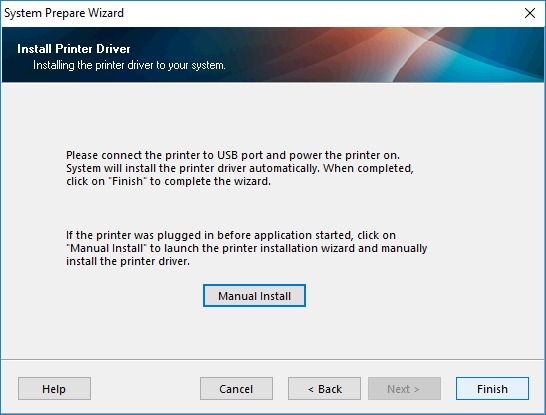
Click 'Finish' in Zebra Setup Utilities.
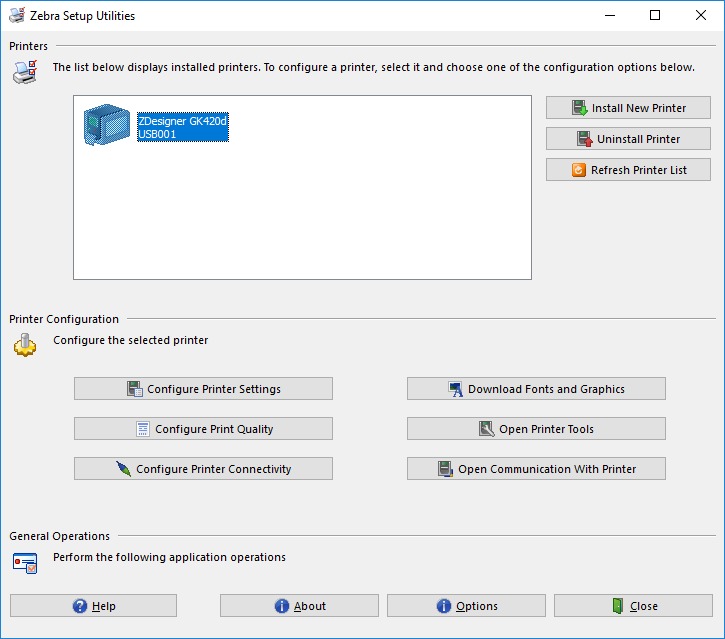
You'll now see the printer Windows installed. If you've installed more than one Zebra printer, they're all listed here. The printer is now installed.
Configuring the Zebra printer
These steps set the Zebra printer's paper size and print quality for shipping labels. We assume you use A6 labels (4 x 6 inch), the standard size for most shipping providers.
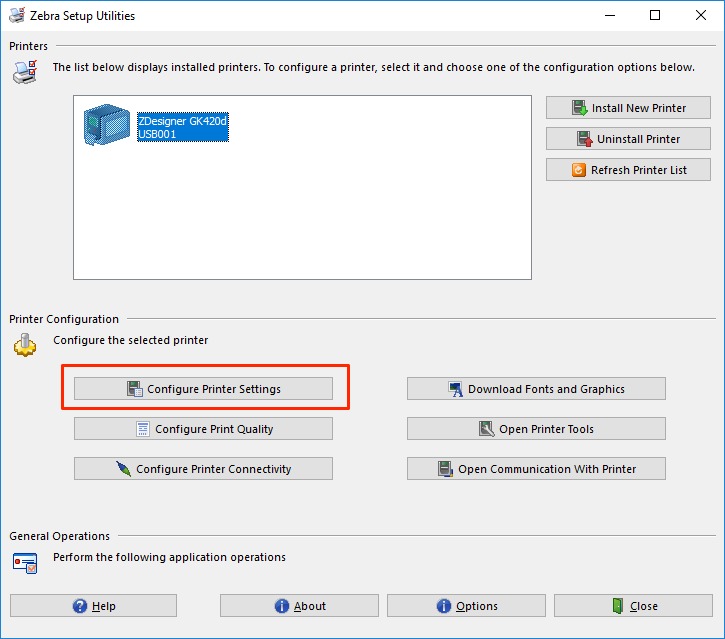
In Zebra Setup Utilities, select the Zebra printer you want to configure.
Click 'Configure Printer Settings'.
Set 'Units' to 'inch'.
Enter 4.02 under 'Width'.
Enter 5.98 under 'Height'.
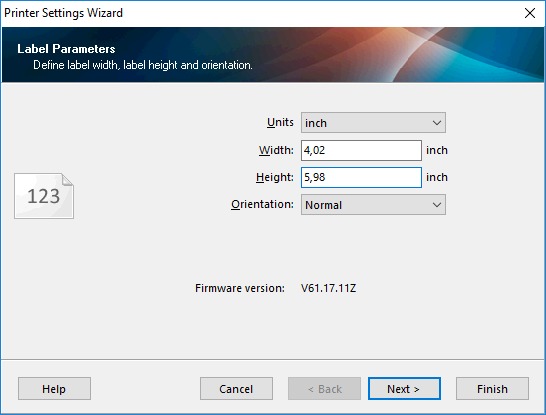
Click 'Next'.
Set 'Speed' to 2.0.
Set 'Darkness' to 5.
A speed of 2 can feel a little slow, but it gives the best print quality, so your shipping labels stay scannable for shipping providers.
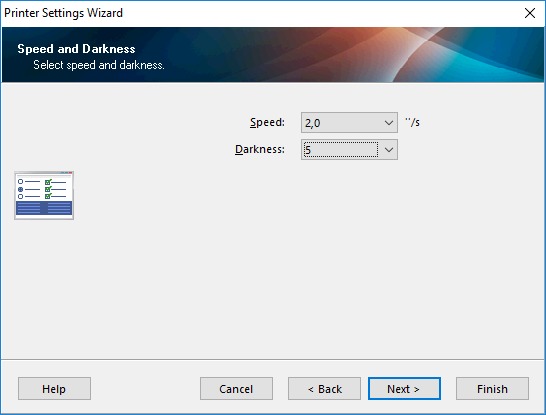
Click 'Next'.
Set 'Print Mode' to 'Direct'. The other options are correct by default. To be safe, check that 'Media Type' is set to 'Web Sensing' and both input fields are set to 0.
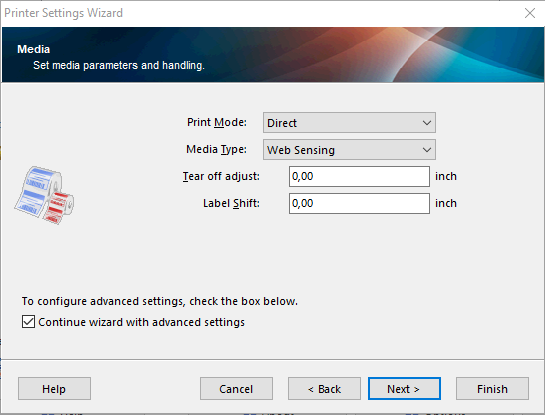
Click 'Finish'. Your printer is now configured.
Next, print a test label to check that everything is set up correctly.
Installing on Mac
On a Mac, you don't need Zebra Setup Utilities, which is Windows-only. macOS already includes the Zebra driver, so there's nothing extra to install.
Connect the Zebra printer. Open the Apple menu, choose System Settings and go to Printers & Scanners.
Click 'Add Printer, Scanner, or Fax'. Your Zebra printer appears in the list of detected devices. Select it.
At the bottom, next to 'Use', click 'Select Software'. Type Zebra in the search field, choose the driver that ends in ZPL and click 'Add'. The printer is now installed.
Printing a test label
Your printer is now installed and ready to use. Download the Picqer test label and print it on your Zebra printer to see how it comes out.
Does the label print clearly with all four corners visible? Then the printer is set up correctly.
Is the label skewed, half-printed or blank, or does the printer feed two at a time? Then calibrate the printer using the steps in Calibrating Zebra printer.
All working? Continue by setting up your printers and packing stations in Picqer.